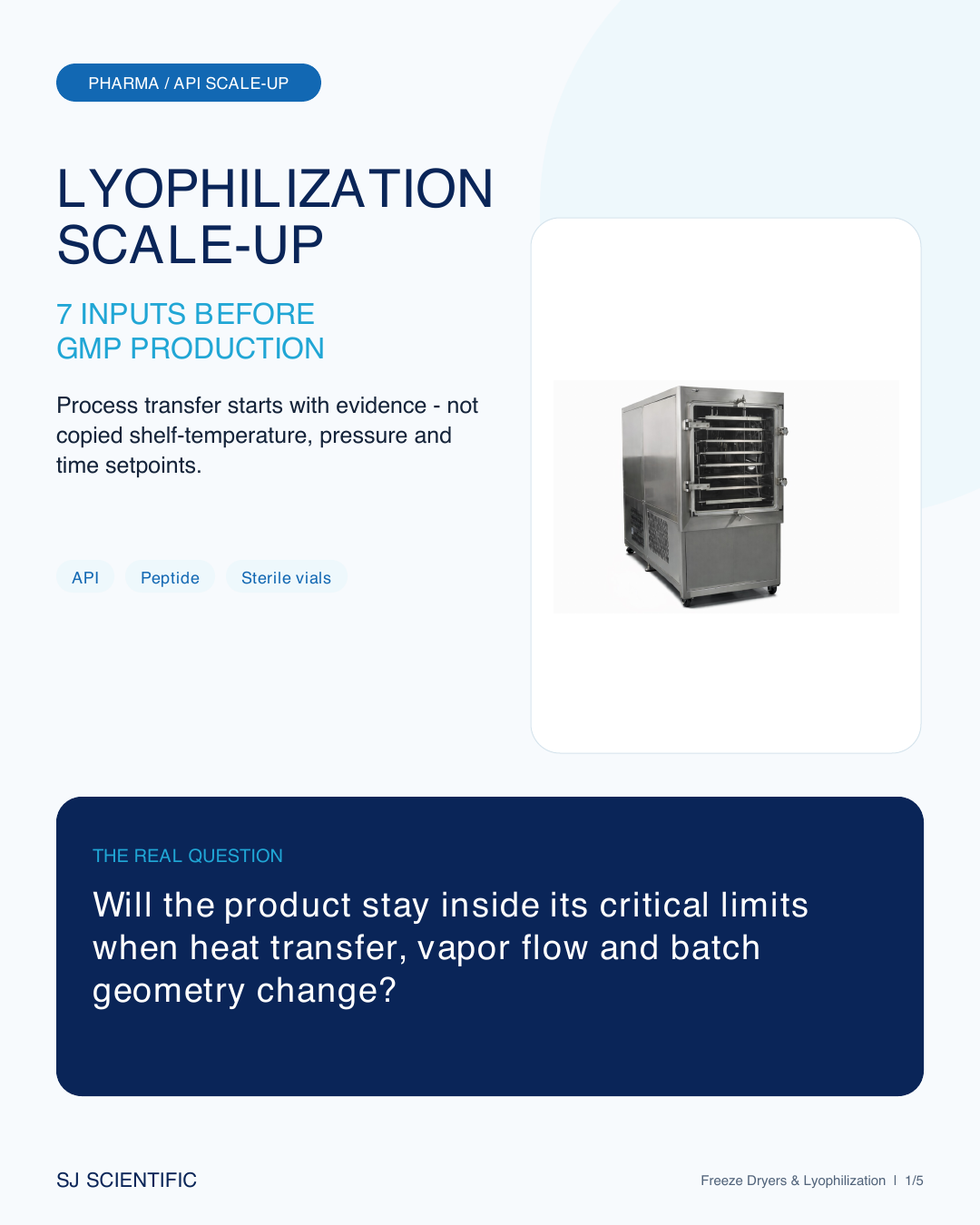
Two runs can share a shelf setpoint yet expose the product to different conditions. A transfer packet makes those differences visible: the formulation, container, fill, loading map, measurement method and endpoint basis travel together. The SJ overview is a prompt for that record, not evidence that a particular transfer has succeeded.
An English slide-based engineering overview of product limits, container geometry, ice load, endpoint evidence and URS scope. Not a validated cycle.
Minimum contents of a development transfer packet
| Material record | Formulation version, solvent composition and measured or provisional product limits |
|---|---|
| Container record | Vial and stopper drawings, fill depth, carrier and half-stoppered clearance |
| Run record | Equipment configuration, load map, sensor locations and temperature/pressure trends |
| Result record | Endpoint rationale, analytical results, deviations and unresolved questions |
Keep the input version with the cycle file
Give the formulation, container closure and loading map their own version identifiers. Link each trial to the exact versions used. A file named successful recipe cannot explain a change in fill depth or stopper geometry.
Separate measured critical limits from assumptions awaiting testing. Identify the source and method for each product limit so that the receiving team knows what it can rely on.
Record the load that was actually tested
Note vial count, fill volume, carrier geometry, unused positions and the measurement locations. Keep partial-load evidence separate from full-load evidence. A test at one load does not automatically cover every combination of fill and batch size.
Include the water-load calculation and its assumptions. It links the formulation record to condenser review; shelf area alone does not describe the vapor the equipment must remove.
Explain how the endpoint was recognized
Retain the applicable pressure and product-temperature trends, sensor types and sensor locations. State which observation supported the end of primary drying and which analytical criteria supported the finished-product result.
Cake appearance can help identify a problem but does not replace residual-moisture, reconstitution or other product-specific testing. Avoid labeling an attractive photograph as validation evidence.
Turn the packet into a comparison plan
Compare the development and proposed production equipment by shelf heat transfer, container contact, instrumentation, vapor path and condenser capability. Mark each difference for an engineering assessment rather than copying setpoints by default.
For an SJ Creator-to-Command discussion, supply this packet with the intended production batch and facility constraints. The result should be a configuration review and a list of work still required, not a promise of automatic process equivalence.
What the short overview contains
The English slides introduce product limits, vial and stopper geometry, fill volume, batch loading, shelf heat transfer, pressure evidence and condenser margin. The closing slide asks for seven URS input groups. The approximately 22-second runtime is the presentation length, not a drying-cycle duration.
Process-transfer questions
Can one successful pilot batch prove a production cycle?
No. It provides evidence for the tested configuration and conditions. The transfer plan must address the proposed equipment, load range and product acceptance criteria.
Should equipment selection wait for every study to finish?
An initial review can begin with clearly marked provisional inputs. Unresolved limits and tests should remain explicit conditions, not be presented as confirmed performance.