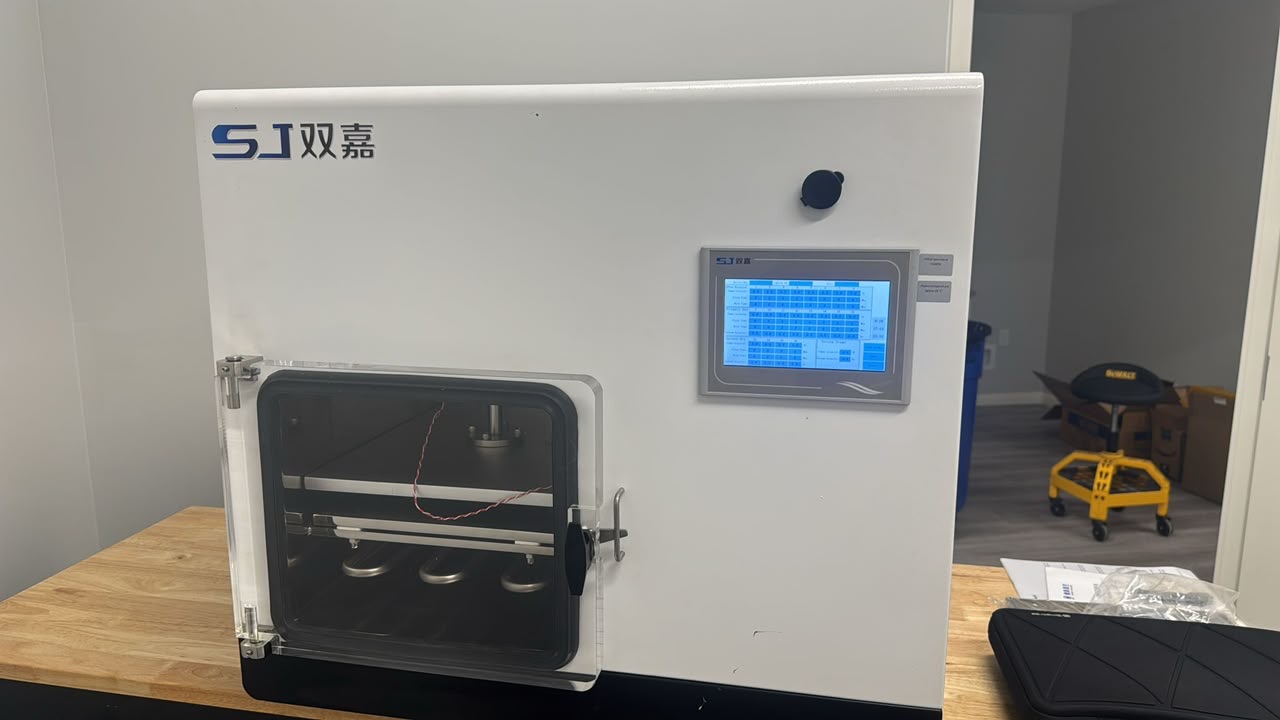
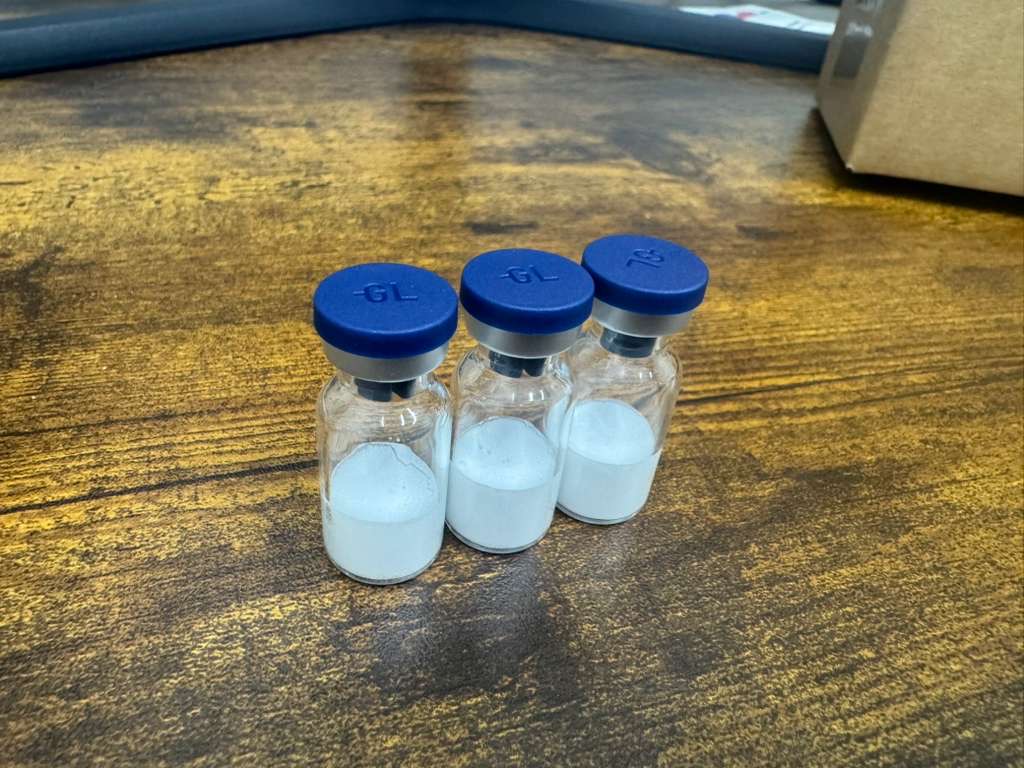
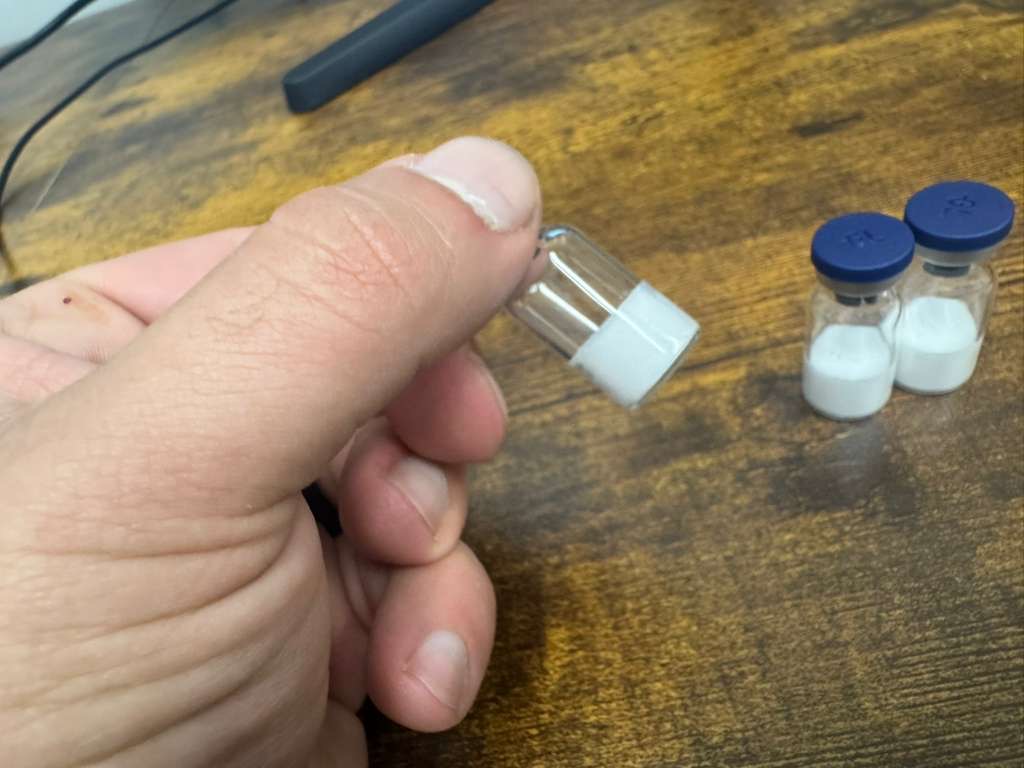
A customer used an SJ-Creator 1S(T) Max shelf-controlled lyophilizer for a small peptide vial batch. The available photographs establish the machine at the application site and show three finished vials with coherent white cakes. The exact formulation, fill volume, cycle recipe and analytical results are not published, so this record focuses on visible evidence and the development decisions that should follow.
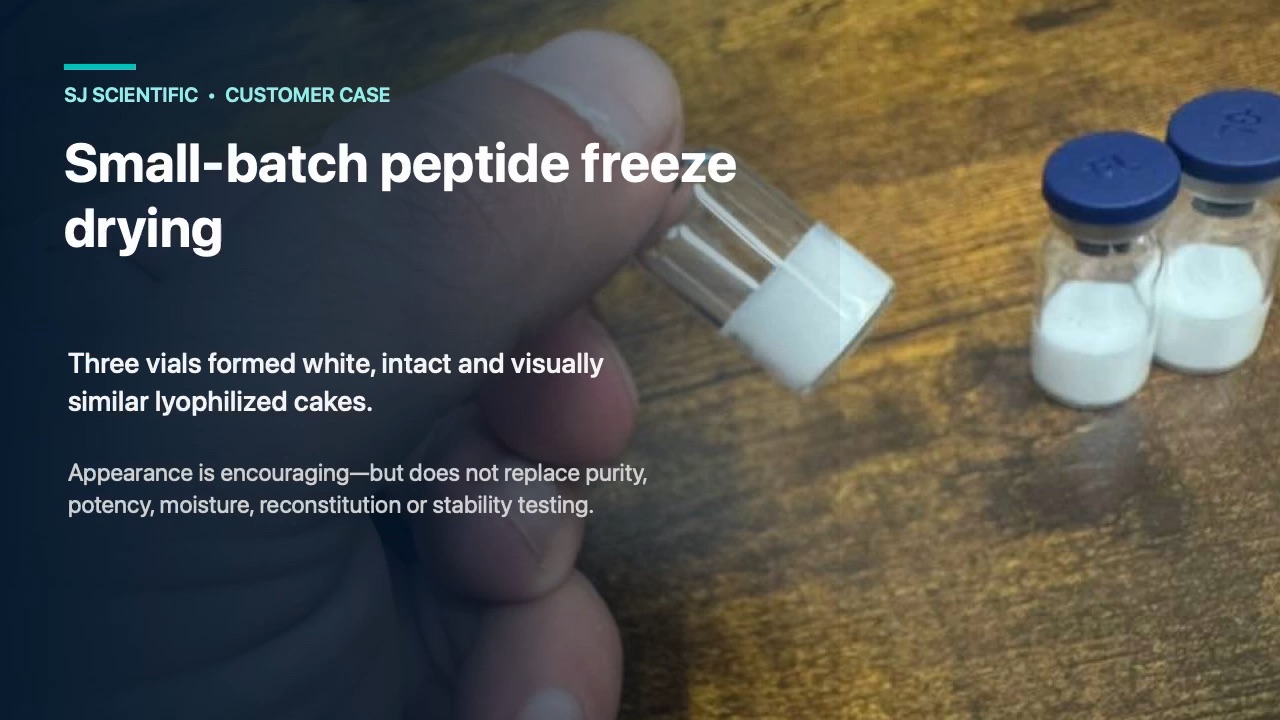
A short public application record connecting the Creator platform with the photographed peptide vial cakes while preserving the analytical evidence boundary.
Customer evidence gallery
Project configuration at a glance
| Application | Customer-described small-batch peptide formulation in vials |
|---|---|
| Equipment | SJ-Creator 1S(T) Max research and process-development lyophilizer |
| Published platform class | 0.12 m2 shelf area with a 300 x 400 mm controlled shelf |
| Visible outcome | White, coherent and broadly similar cakes in the three photographed vials |
| Evidence not supplied | Cycle setpoints, assay, purity, residual moisture, reconstitution, sterility and stability data |
What this customer evidence establishes
The equipment photograph identifies a compact shelf-controlled process-development freeze dryer operating at the customer site. The post-cycle photographs show the physical result in multiple comparable vials rather than a generic stock image.
The visible cakes remain coherent and have a broadly similar appearance. No obvious meltback or severe collapse is visible from the recorded angles. That is a useful observation, but it is not a chemical or biological quality result.
Why shelf control matters in peptide cycle development
A collector-style laboratory freeze dryer can remove water, but a shelf-controlled peptide lyophilizer gives the developer defined freezing, primary-drying and secondary-drying inputs. The shelf and pressure history can then be compared with representative product temperatures and the final vial result.
For the next run, the team should preserve the formulation, vial, stopper, fill depth and load map while changing only the variable under study. That makes a visually successful result reproducible rather than accidental.
How to read a good-looking peptide cake
Visual inspection should record cake height, color, shrinkage, cracks, collapse, meltback, powder movement and differences between edge and center positions. Repeating photographs with the same lighting and angle makes the record more useful.
A white intact cake cannot show peptide concentration, purity, potency, aggregation, residual moisture, reconstitution, sterility or shelf life. Product-specific analytical testing must remain part of the decision.
Run data needed before calling the process repeatable
Record formulation and solvent class, vial and stopper drawings, fill volume, vial count, load map, shelf recipe, product probes, pressure trend, condenser behavior, endpoint evidence, backfill and final handling.
Link those machine records to residual moisture, reconstitution and the quality attributes relevant to the peptide. A single attractive cake is a good reason to continue the study, not a replacement for it.
Moving from a small-batch peptide freeze dryer to production
Do not copy the same shelf setpoints into a larger machine and assume the product history is unchanged. Compare vial heat transfer, shelf mapping, vapor flow, pressure control, condenser load, edge effects and the warmest product location.
A sound transfer plan confirms that the receiving pilot or GMP lyophilizer reproduces the intended product-temperature and moisture history across its actual load.
Peptide freeze-drying case FAQ
What does this peptide lyophilization case prove?
It documents the identified freeze dryer at the customer site and a promising visible result in three peptide vials. It does not prove purity, potency, residual moisture, sterility or stability.
Why is a shelf-controlled lyophilizer useful for small peptide batches?
It lets the developer define and record freezing, primary-drying and secondary-drying conditions, then compare them with product temperature and vial results.
Can the photographed cycle be copied for another peptide?
No. The formulation, vial, fill depth, load and critical product-temperature limit are product-specific, and the confidential setpoints were not supplied.
What should be tested after a good visual cake result?
Use a product-specific plan that may include assay, purity, degradants, residual moisture, reconstitution, particles or aggregation, activity and stability.