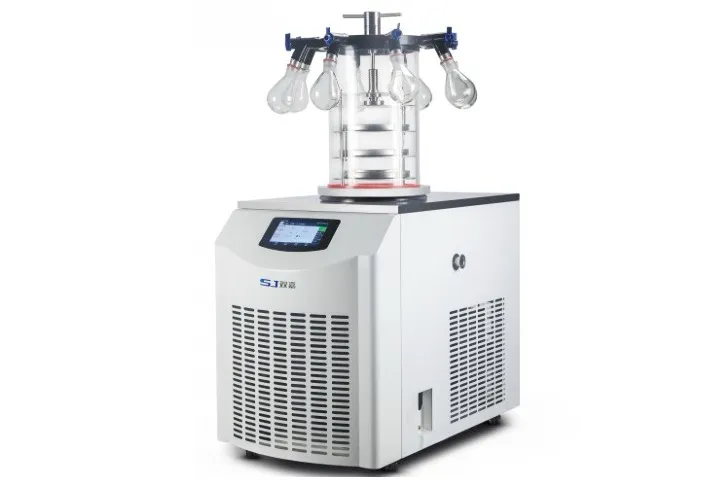
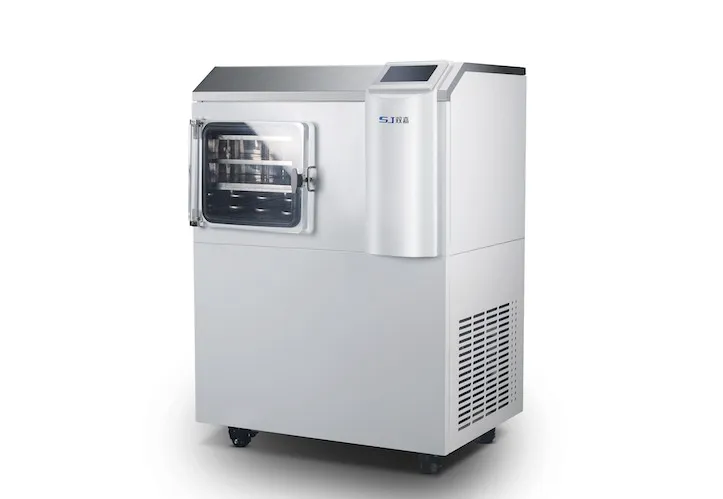
A laboratory lyophilizer used for vial cycle development must control the product environment through freezing, primary drying and secondary drying. Collector volume alone does not show whether the equipment can produce a transferable cycle.
Start with the formulation and vial
Define fill volume, vial diameter, stopper position and the formulation temperature limit. These inputs affect shelf loading, heat transfer and the allowable primary-drying conditions.
Use a loading map that distinguishes edge and center vials. A few isolated vials can receive more radiation than a representative packed batch.
Control and measure the process
Specify shelf cooling and heating, chamber-pressure control, product-temperature probes and a suitable pressure measurement strategy. Comparing pressure indications can support primary-drying endpoint assessment when the instrumentation is available.
Retain recipe versions and trend data with the batch result. A screen photograph is not an adequate cycle-development record.
Select condenser and vapor-path margin
Condenser temperature, ice capacity, refrigeration recovery and chamber-to-condenser conductance work together. The unit must manage peak sublimation without losing the intended chamber pressure.
Lower collector temperature can add margin, but it does not correct an overloaded shelf, restricted vapor path or overly aggressive heat input.
Choose between LT-B and LT-P platforms
LT-B systems cover routine laboratory samples, flasks and accessory chambers. LT-P24 is the stronger fit when controlled shelf freezing, vial recipes and pilot transfer are the project objective.
Frequently asked questions
Do I need controlled shelves for vial development?
They are strongly preferred when shelf temperature and freezing history must be defined and transferred.
How many vials fit?
Capacity depends on vial outer diameter, edge clearance, shelf dimensions and loading method, so a vial drawing and target count are required.